
In the heart of Yunnan, China, a golden week unfolds differently. This is a journey where wabi-sabi meets Western minimalism, a symphony of
In the realm of the senses, the smallest things reveal the largest secrets, whispered the elderly tea master as he gently poured a delicate brew into my cup. This was the moment my Golden Week alternative in Yunnan began, a journey that would intertwine the ancient with the modern, the traditional with the minimalist, in a harmonious dance of wabi-sabi and Western minimalism.
The tea master's hands, gnarled yet graceful, moved with a rhythm that spoke of years of practice. The steam rising from the porcelain teapot was a soft, almost imperceptible mist, a whisper of warmth that filled the air. The tea leaves, a vibrant emerald, swirled in the brew, their colors deepening as the water's temperature rose, a dance of life and decay, the fleeting beauty of impermanence.
We sat in a small, dimly lit room, the walls lined with shelves of ancient scrolls and artifacts, each object a testament to the rich history of Yunnan. The air was thick with the scent of aged wood and the faint, musky aroma of tea leaves, a sensory tapestry that enveloped me in a sense of timelessness.
As the tea master spoke of the origins of Yunnan's tea culture, I couldn't help but marvel at the simplicity of his words, yet the depth of their meaning. "In this land," he said, "we live in harmony with the natural world. Tea is not just a beverage, but a connection to the earth, to the sky, to the very essence of life itself."
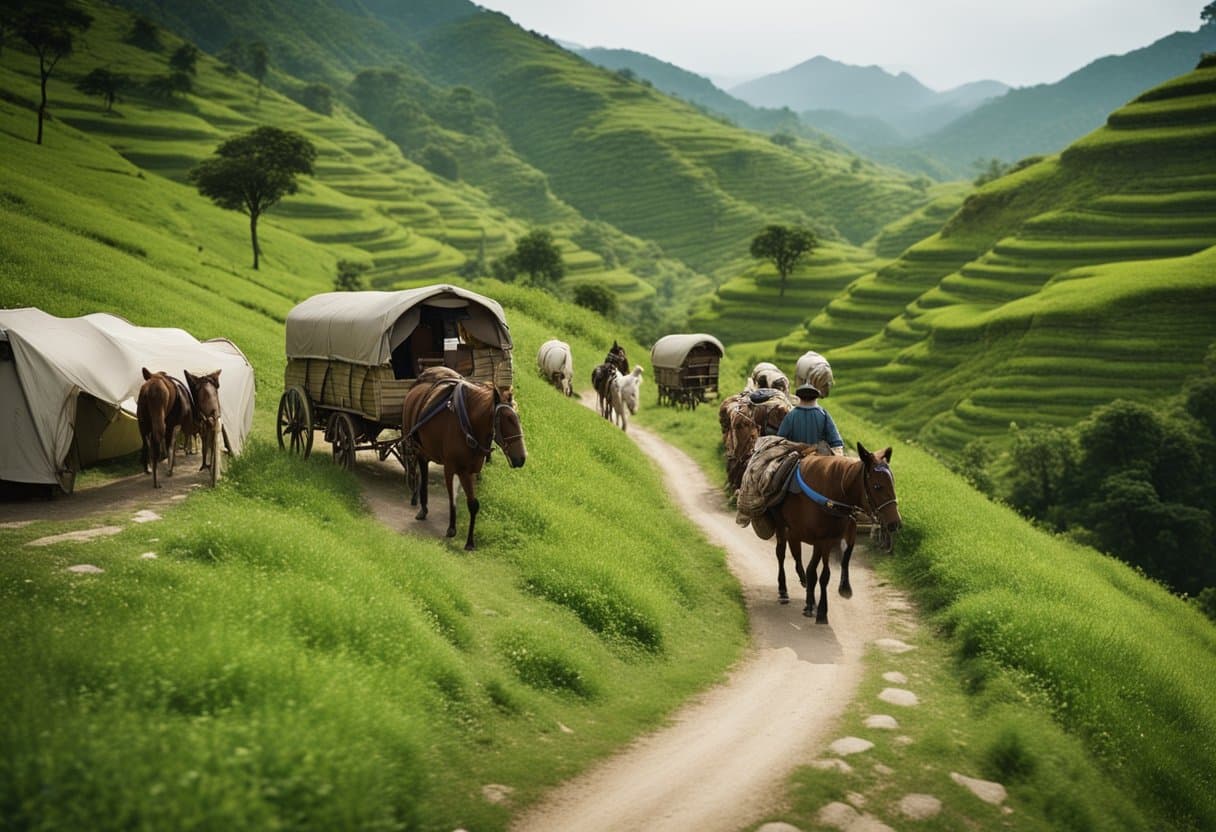
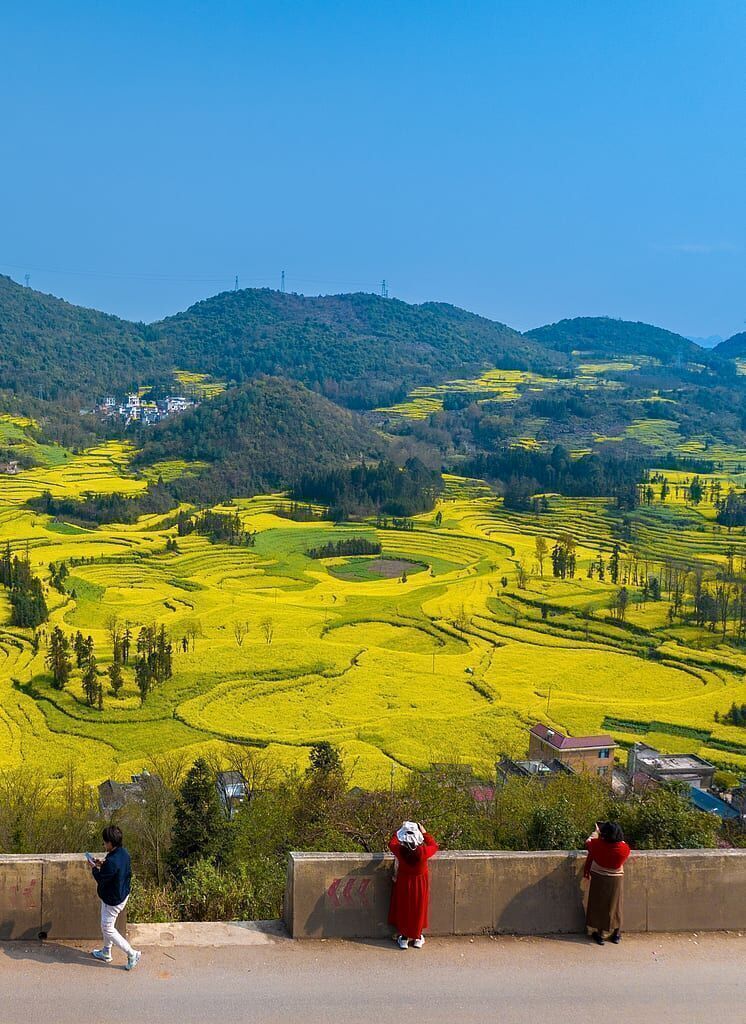
The next day, I set out to explore the tea plantations of Lijiang, the mountains rising majestically in the distance, their peaks cloaked in mist and clouds. The journey was a testament to the minimalist philosophy, as we traveled in a small, rusting bus, the windows open to the raw beauty of the countryside.
The tea plantations were a patchwork of green, the leaves rustling in the gentle breeze. The air was crisp and clean, the scent of tea leaves mingling with the earthy aroma of the soil. I followed the tea pickers, their movements fluid and practiced, as they gathered the leaves that would soon be transformed into the elixir of life.
As the sun dipped below the horizon, casting long shadows across the fields, I found myself at a small, thatched-roof teahouse. Here, I shared a pot of tea with a group of locals, our conversations a blend of laughter, stories, and the rich tapestry of Yunnan's diverse cultures.
The following day, I ventured into the city of Dali, a place where tradition and modernity coexist in a delicate balance. The old town, with its cobblestone streets and traditional architecture, was a stark contrast to the towering skyscrapers that dotted the skyline.
I wandered through the market, the colors and sounds a sensory overload. The vibrant hues of the fabrics, the pungent smell of spices, the lively chatter of the vendors, all contributed to a sense of being alive, present in the moment.
In a small alley, I stumbled upon a small, wooden shop selling traditional Yunnan instruments. The shopkeeper, an elderly man with a twinkle in his eye, invited me to try my hand at playing the erhu, a two-stringed fiddle. As the notes echoed through the shop, I felt a connection to the ancient culture that had shaped Yunnan's rich musical heritage.
As the week drew to a close, I found myself returning to the tea master's tea house, the familiar scent of tea and the gentle hum of conversation enveloping me once more. The tea master, recognizing my return, poured another cup, this time a darker, richer brew, its aroma a promise of the memories I had made.
"In this journey," he said, "you have learned that beauty is found in simplicity, that connection is found in the smallest of things. May this experience stay with you, a reminder of the profound lessons of Yunnan."
As I left the tea master's tea house, the sun setting behind the mountains, I felt a profound sense of peace and gratitude. The journey through Yunnan had been more than a mere holiday; it had been a transformative experience, a testament to the power of wabi-sabi and the enduring beauty of life's simplest pleasures.

Share Your Thoughts
Have you ever experienced a farm stay in China? Share your thoughts in the comments below!
Join the Discussion →Ready for a stay?
Pugui Mountain Retreat — wabi-sabi living at 22°C.
Related Reading
The Quiet Luxury of Yunnan: Where Wabi-sabi Meets Western Minimalism
Beyond the crowds of Dali, a hidden valley in Yunnan unfolds
Yunnan's Hidden Glamping Paradise: Where Wabi-Sabi Meets Western Minimalism
Among Yunnan's mist-wrapped mountains, a new breed of wilder
Wabi-Sabi and the Wired Life: A Digital Nomad's Yunnan
In the mist-wrapped mountains of Yunnan, ancient Chinese imp