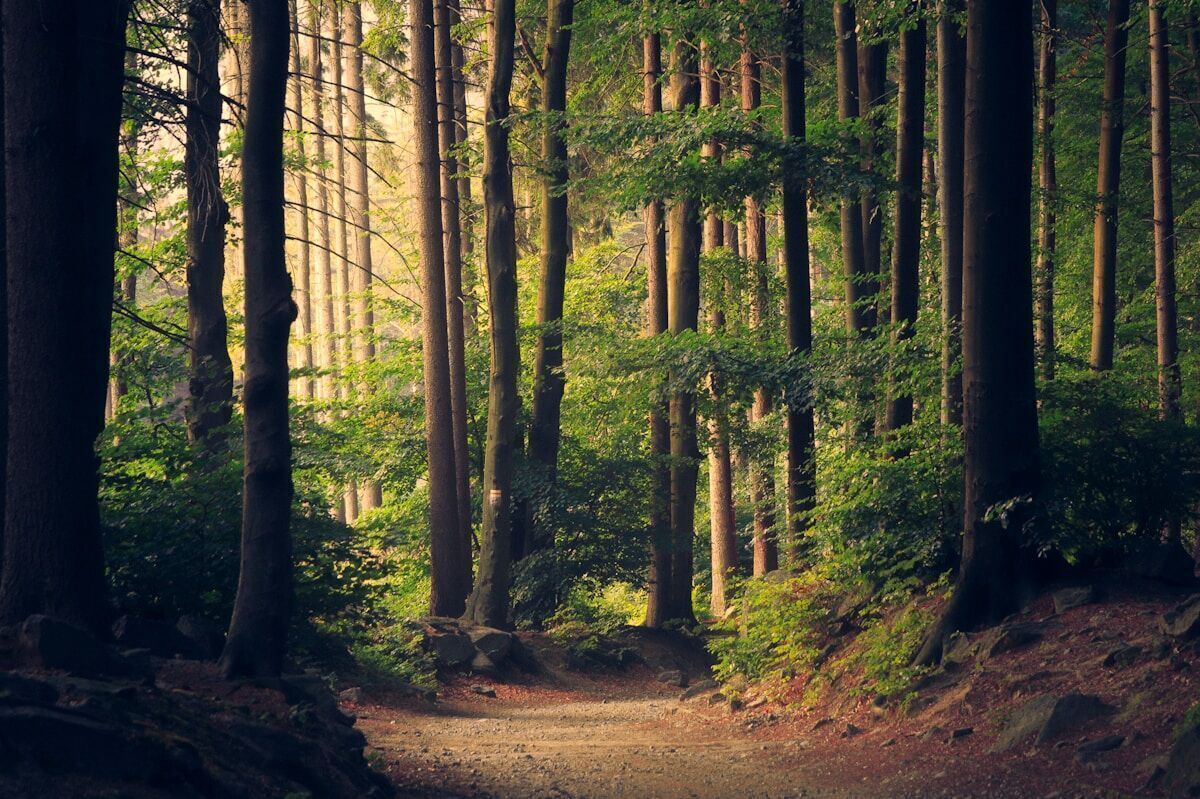
In a stone village above the clouds, I found a luxury that had nothing to do with perfection—and everything to do with presence.
What if luxury were not about more, but about enough? I asked myself this on the third morning in the village of Baima, a huddle of grey stone and dark timber tucked into a fold of the Yunnan mountains. I had come expecting the usual Chinese travel spectacle—lanterns, tour groups, a sanitised version of rural life. Instead, I found a place that had simply continued to be itself, indifferent to my arrival. And that, I realised, was the rarest kind of opulence.
The room I was given was a study in subtraction. Whitewashed walls, uneven by design or by time—I could not tell, and it did not matter. A low bed draped in coarse linen the colour of oat milk. One window, uncurtained, framing a single pine tree that leaned like a tired calligrapher. The floor was tamped earth mixed with river stones, worn smooth by generations of bare feet. My host, a woman named Amei, had placed a clay vase on the sill, holding three stems of dried wild chrysanthemum. Nothing else. The absence of objects felt like a form of generosity.
In the mornings, the light arrived slowly, as if unsure it belonged. It crept over the opposite ridge, slid down the slate roofs, and pooled on my floor in a pale, watery gold. I learned to wake without an alarm, listening instead to the percussion of the village: the clack of a wooden bucket against a well, the soft scrape of a broom on packed earth, the distant, unhurried moan of a yak. There was no traffic, no announcement, no digital chime. The quiet was not empty—it was full of small, deliberate sounds, each one placed like a stitch in a quilt.
Amei's kitchen was a dark, smoky room with a fire pit at its centre. She fed me from the land: potatoes roasted in ash, wild greens gathered from the terraces, a broth of chicken that had spent its life pecking at the same soil I walked on. The bread was dense and chewy, baked in a stone oven, and tasted of wheat and patience. She never asked if I liked it. She simply placed the bowl in front of me, and I understood that gratitude was the only appropriate response. The food was not refined. It was better than refined—it was true.
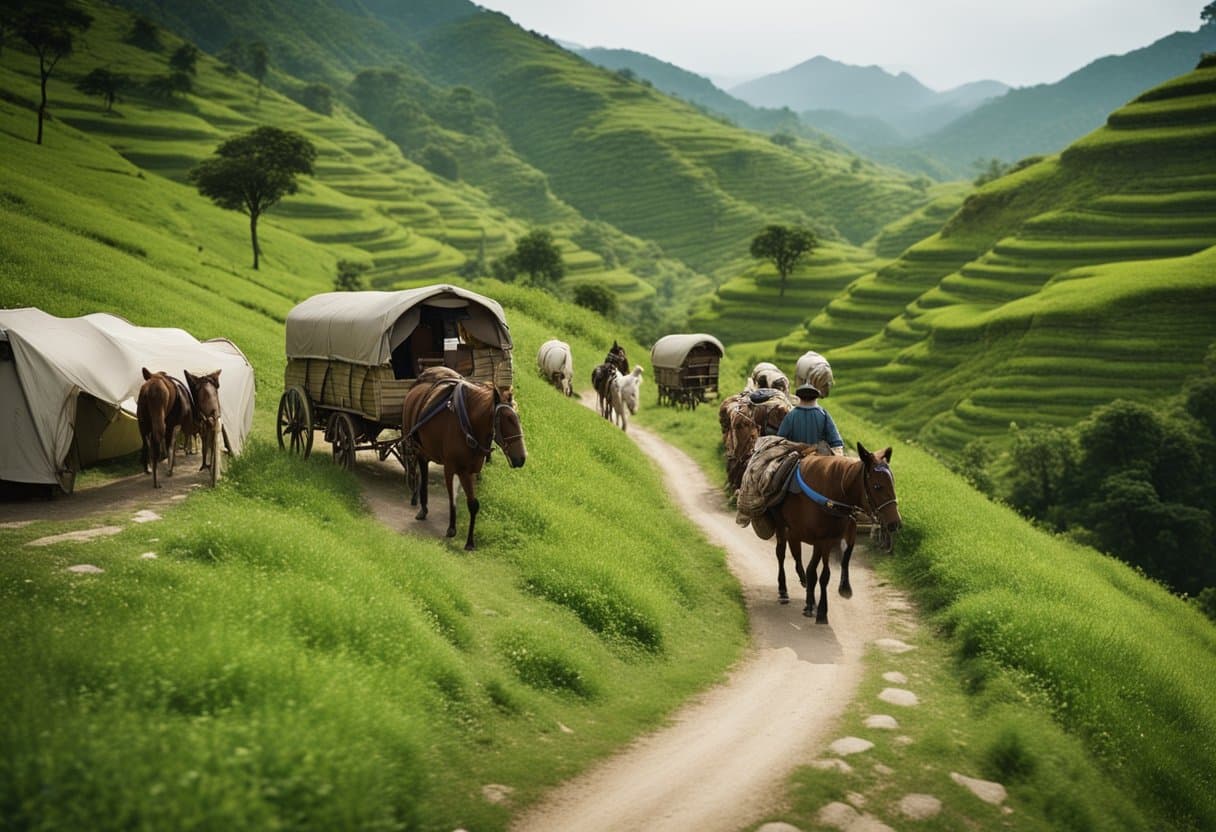
I spent the afternoons walking the terraced fields that fell away from the village like the folds of a pleated skirt. The soil was a deep, wet ochre, and the rice paddies mirrored the sky in broken pieces. Farmers worked in pairs, their curved knives flashing in the sun, their conversation a low murmur that blended with the wind. I noticed that nothing was straight. The walls of the terraces curved, the paths twisted, the fences leaned at angles that would have made a Western architect wince. And yet the whole scene possessed a harmony that felt more deliberate than any blueprint. It was wabi-sabi made landform—beauty in the crooked, the weathered, the incomplete.
There is a particular kind of silence that exists at altitude. It is not the silence of emptiness but the silence of distance—from cities, from clocks, from the endless appetite of the self. I sat on a flat stone above the village one evening, watching the smoke rise from a hundred chimneys in thin, blue threads. The sky turned the colour of bruised plums, and then the stars came out, not one by one but all at once, like a curtain lifting. I thought about the word luxury. In my world, it had meant private pools, marble bathrooms, champagne on demand. Here, it meant this: a warm stone under me, a sky with no schedule, and the knowledge that tomorrow would begin with the same unhurried light.
On my last night, Amei poured me a cup of local liquor, clear and fierce, from a plastic bottle she kept in a cupboard. We sat on low stools by the fire, not speaking. The flames threw our shadows against the soot-blackened wall, dancing in a way that felt ancient. She pointed to a crack in the beam above us, running like a vein of lightning. “Good wood,” she said. “It moves with the mountain.” I nodded, not fully understanding, but feeling the truth of it in my bones. The house was not fighting the mountain. It was in conversation with it.
Western minimalism taught me to strip away the unnecessary. But this village taught me something deeper: that the unnecessary was never the enemy. The enemy was the illusion that we can control our surroundings, that we can make a place perfect, sealed, immune to time. Here, the walls breathed. The wood aged with grace. The imperfection was not a flaw to be corrected but a signature of life itself. That is the luxury I will carry with me—not the image of a pristine retreat, but the memory of a crooked beam that had learned to move with the mountain.
I left before dawn, as the first light began to silver the ridge. Amei was already at the gate, holding a cloth bundle of roasted potatoes for the road. She did not wave. She simply stood there, a small figure in the grey morning, and watched me walk down the path. I did not look back. Some things are better left imperfect, unfinished, exactly as they are. That is the quietest luxury of all: to let a place remain itself, and to let yourself be changed by it, without needing to own it, explain it, or make it beautiful for anyone else. The village of Baima is still there, leaning into the mountain, imperfect and whole. And somewhere in that crookedness, I found a version of luxury I had never known to look for.

Share Your Thoughts
Have you ever experienced a farm stay in China? Share your thoughts in the comments below!
Join the Discussion →Ready for a stay?
Pugui Mountain Retreat — wabi-sabi living at 22°C.
Related Reading
The Quiet Luxury of Yunnan: Where Wabi-sabi Meets Western Minimalism
Beyond the crowds of Dali, a hidden valley in Yunnan unfolds
Yunnan's Hidden Glamping Paradise: Where Wabi-Sabi Meets Western Minimalism
Among Yunnan's mist-wrapped mountains, a new breed of wilder
Wabi-Sabi and the Wired Life: A Digital Nomad's Yunnan
In the mist-wrapped mountains of Yunnan, ancient Chinese imp