
Damp slate beneath your boots, morning mist over river stones, and the quiet dignity of weathered stone. A slow, minimalist travel guide to
At seven in the morning, dew rests heavy on the slate steps of Shengguantun. The stone beneath my boots is cold, pockmarked by centuries of iron-shod hooves and softened along the edges by river dampness. Before me, the twin arches of the ancient bridge span the quiet, tea-colored waters of the stream, carrying the early morning light across their moss-crowned ridges. There is no background music here, no tour buses purring at the turnoff—only the muted rush of water over polished pebbles and the distant, dry scrape of a bamboo broom sweeping a courtyard nearby.
Shengguantun sits tucked in the undulating valleys of rural Yunnan, a quiet pause along trade veins that once connected Southwestern China to the broader world. While modern itineraries rush travelers toward the high-gloss preservation of Dali or Lijiang, this small area of stone, rammed earth, and old trees retains an unvarnished honesty. The bridges themselves are masterworks of dry-stacked masonry and hand-chiseled limestone, weathered to a soft ash-grey. To walk here is to appreciate wabi-sabi in its purest form: the subtle sag of an old archway, the narrow fissures filled with lime mortar, the pale green lichen marking decades of monsoon rains.
If you are traveling from Kunming or nearby Qujing, arrange for a private driver to drop you at the village approach just as the sun clears the eastern ridges. The area is open throughout the day, but the true luxury of Shengguantun lies in those early hours when mist lingers over the vegetable patches and the air smells sharply of damp soil and eucalyptus. Wear quiet, low-profile leather or canvas walking shoes with thin, high-friction soles. The flagstone paths, smoothed by generations of travel, become surprisingly slick under morning dew.
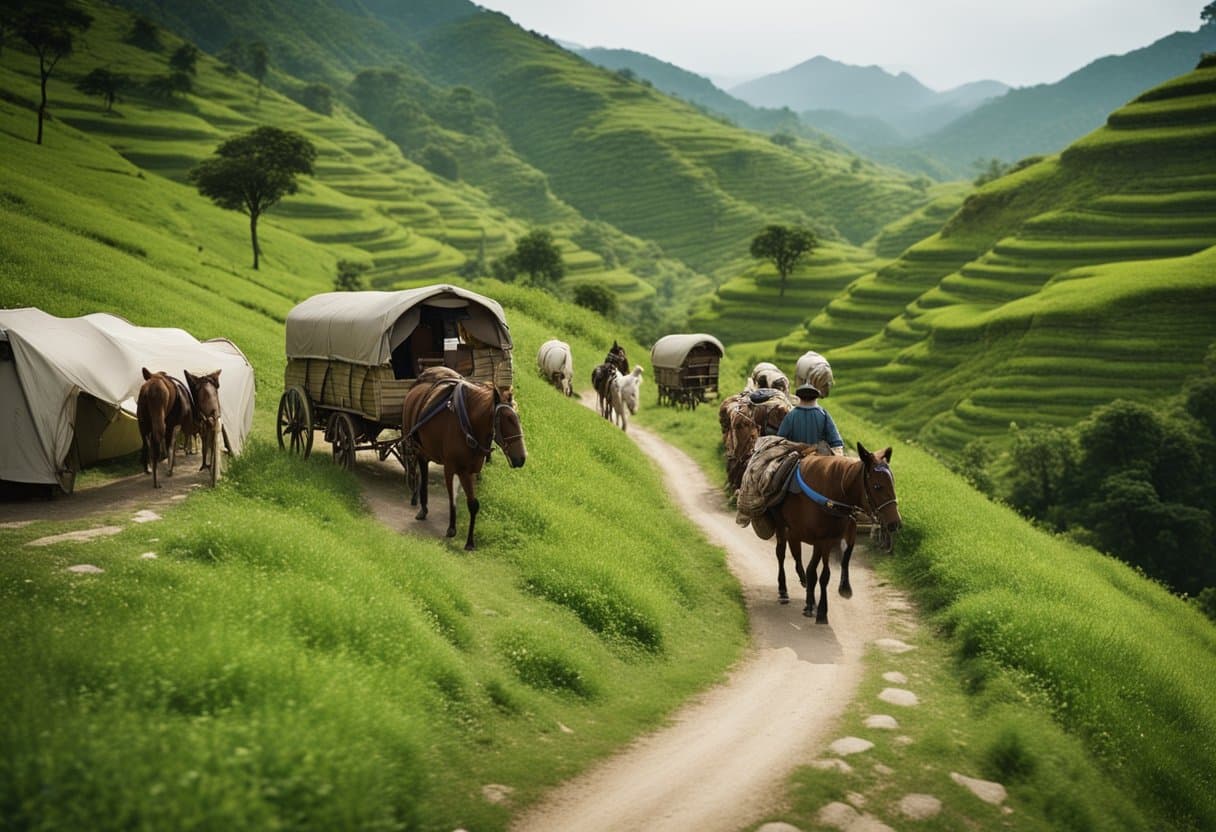
Beyond the primary stone bridge, follow the narrow path that traces the riverbank upstream. It leads past low-slung courtyard houses with weathered timber eaves, where yellow corn husks hang drying beneath dark slate tiles. Small dirt spurs branch off into terraced plots of mountain greens and broad beans; ancient camellia trees lean heavy over the low earth walls. Keep your gear minimal. A single small camera with a fixed prime lens matches the intimate scale of the village. The local elders sitting on carved wooden benches are gentle and soft-spoken; a quiet nod and a spoken *ni hao* will often yield a warm smile and an invitation to rest in the shade.
By mid-morning, as the plateau sun burns away the haze, step into one of the small, family-run tea hearths near the north bridgehead. Hospitality here is unhurried. Sit on a low stool of jointed elm wood and ask for a cup of local roasted green tea or a lightly aged Pu'er, brewed in an unglazed clay pot over glowing charcoal embers. Pair it with fresh buckwheat cakes (*kuaiban*), cooked on a cast-iron skillet over an open hearth and served with a thin drizzle of wild mountain honey. The meal is simple, deeply rooted in the surrounding soil, and served on rough earthenware that feels substantial and honest in your hand.
For those choosing to linger overnight, seek out small boutique homestays set inside converted traditional courtyard dwellings rather than standard luxury hotels. Look for properties that honor the original timber post-and-beam construction, featuring unbleached linen bedding, lime-washed walls, and open inner courtyards filled with potted ferns and stone basins. Be sure to ask your host to coordinate your departing transport the evening before, as local car services are sparse in the late afternoon.
Leaving Shengguantun, you carry very little away—perhaps the light scent of pine smoke clinging to your jacket and the rhythmic memory of running water under your step. In a landscape increasingly refined for speed, the worn stones of Shengguantun remind us that true elegance rarely demands attention; it simply endures, quietly aging beneath the high Yunnan sky.

Share Your Thoughts
Have you ever experienced a farm stay in China? Share your thoughts in the comments below!
Join the Discussion →Ready for a stay?
Pugui Mountain Retreat — wabi-sabi living at 22°C.
Related Reading
The Quiet Luxury of Yunnan: Where Wabi-sabi Meets Western Minimalism
Beyond the crowds of Dali, a hidden valley in Yunnan unfolds
Yunnan's Hidden Glamping Paradise: Where Wabi-Sabi Meets Western Minimalism
Among Yunnan's mist-wrapped mountains, a new breed of wilder
Wabi-Sabi and the Wired Life: A Digital Nomad's Yunnan
In the mist-wrapped mountains of Yunnan, ancient Chinese imp